


Knowledge & Opinion
28. November 2025
Blog
Knowledge & Opinion
28. November 2025
The long-awaited relaxation of the regulatory requirements for battery storage projects has finally arrived and it is quite something. The new regulation in EnWG Section 118 (6) removes a major stumbling block: Battery storage systems can now carry out arbitrage transactions without the previous risk of grid fees eating up a large part of the revenue. This paves the way for economical storage operation methods that were previously only possible with great uncertainty.
For industrial customers, this means that in addition to traditional behind-the-meter applications such as atypical grid usage, increasing self-consumption or optimizing electricity costs via dynamic tariffs, additional revenues can now also be generated, for example, through arbitrage or more flexible direct marketing.
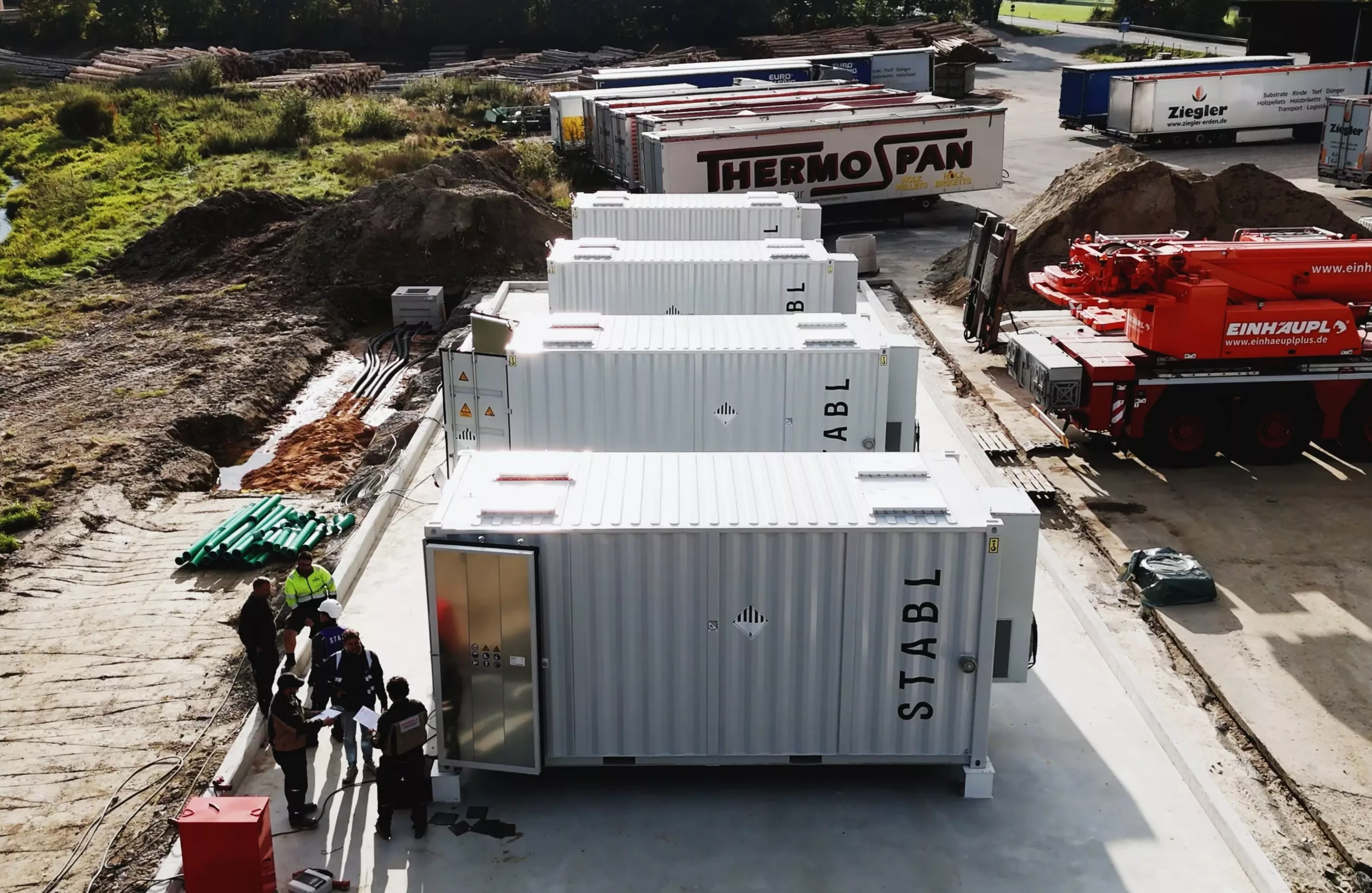
Our joint project with the company Rießner provides a practical example. Together with the marketer and electricity provider SeTrade, which is one of our trading partners, a storage facility is being operated there that cleverly combines BTM and FTM applications. The new legal regulation reduces the risk of unexpected expensive load peaks arising from arbitrage, while at the same time increasing the incentive to operate the storage facility flexibly and in a market-oriented manner.
For solar park operators in particular, a completely new scope is opening up: a battery storage system can now also absorb gray electricity without jeopardizing the EEG remuneration. This allows generation profiles to be smoothed out and additional revenue to be generated.
The multi-use approach in particular shows its strength here: The storage system can buy cheap energy in the morning and sell it in the more cost-intensive midday and evening hours. The typical four to five hours of the PV generation curve are ideal for efficiently storing surpluses temporarily and marketing them profitably later.
What is needed now? A clearly defined charging capacity for the battery storage system, then nothing stands in the way of flexible and economically optimized operation.
What happens next? As part of the MiSpeL process, the appropriate metering and measurement concepts for the various use cases are now being specified. The deadline for this is June 30, 2026. In parallel, the Federal Network Agency is working on the practical implementation of the demarcation options in accordance with Section 19 (3b) EEG and Section 21 EnFG so that both netted and eligible energy quantities can be measured clearly and unambiguously.
For the first time, this will create a truly flexible and secure regulatory framework that allows industrial consumers and producers to consistently use battery storage systems to serve the grid and the market – without hidden pitfalls and without the risk of unintentionally increasing fixed costs through certain operating modes.
The combination of exemption from grid charges, multi-use capability and clear metering specifications is opening up a market that was previously blocked by uncertainty and complexity. The way is now paved for a broad, economically viable roll-out of battery storage in industry and generation.
Are you interested in an exchange? Please get in touch with us.
Contact us
People & Events
15. December 2025
Review of the Year: Highlights 2025
Knowledge & Opinion
28. November 2025
Relaxation of the EnWG with more freedom for battery storage systems

Knowledge & Opinion
10. October 2025
Inverter Efficiency: Key to Performance of Modern Battery Storage Systems
Navigation
© 2026 STABL Energy GmbH