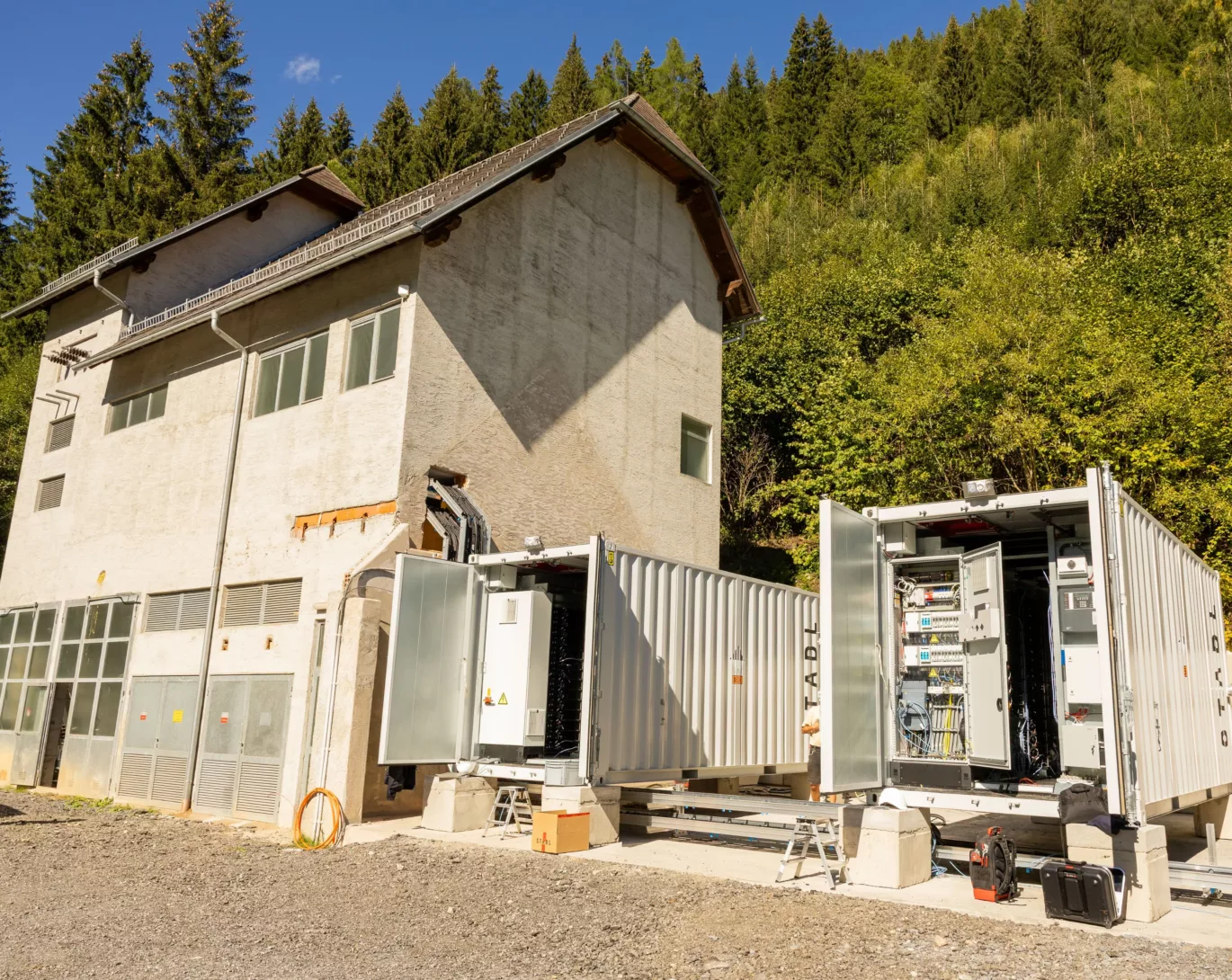

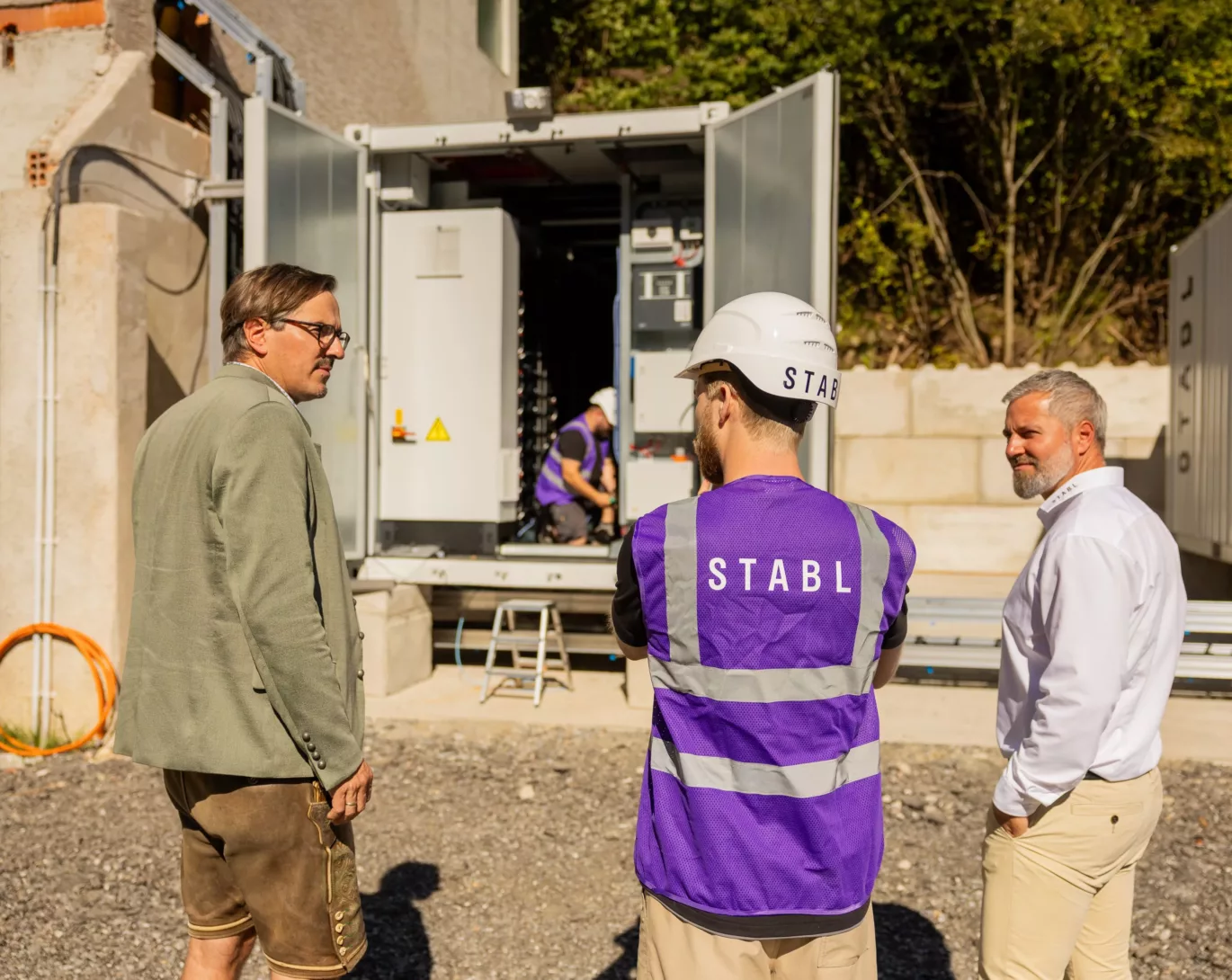
Committed to Tradition: For more than 100 years, Elektrowerk Schoeder GmbH has been a leader in regional energy supply in Styria, Austria. With seven STABL battery storage systems and 13.7 MWh of storage capacity, the family-run company is now taking the next step: flexibly storing solar and water energy, balancing out peak loads, and preparing the regional power grid for an increasingly renewable energy supply.
Hydropower has been part of the energy supply by Elektrowerk Schoeder GmbH for generations. At the same time, more and more photovoltaic systems are being added in the service area. This is also changing the challenges associated with renewable electricity: It is not always available exactly when it is needed.
Especially when large amounts of solar power are fed into the grid simultaneously during the midday hours, the new storage systems will absorb this surplus and make the energy available again as needed, primarily in the evening hours. At the same time, peak loads can be smoothed out and the strain on the power grid reduced. As a power supplier, energy producer, and trader, Elektrowerk Schoeder is now supporting the regional energy transition through the targeted use of seven battery storage systems that better align generation with consumption. For Managing Director Ing. Stefan Stadlober, the expansion of the storage infrastructure is therefore a logical next step.
Four systems have already been installed at the central switching station, and three more at the utility’s power plant sites. This creates a decentralized storage system that supplements the existing PV and hydropower infrastructure with a total storage capacity of 13.7 MWh and over 2.8 MW of power.
According to STABL project manager Bastian Hutter, the heart of the battery storage system is the multilevel inverter technology, which dynamically connects the batteries. With a round-trip efficiency of over 94 percent, energy losses are kept to a minimum. At the same time, the system allows for the replacement or repowering of individual battery modules in the event of failures, rather than having to replace the entire storage system. It was precisely this system flexibility that was a key selling point for Stefan Stadlober: “STABL’s open storage system ensures we’ll remain future-ready.”
For a project of this magnitude, technology alone is not the deciding factor. For Elektrowerk Schoeder, finding a partner who understood the unique challenges faced by an energy utility was just as important. Stefan Stadlober and technician Christian Gerold recognised this early on in their collaboration with STABL. ‘The unique storage technology won us over. But just as important to us was the positive feeling we had about working together. The STABL team immediately understood our requirements and knew exactly what we needed.”
For STABL, the project holds another important significance: It is the company’s first battery storage project sold in Austria and thus a step beyond its home market in Germany. B2B Account Manager Peter Sanzcel sums up this perspective: “This first project in another European country is a milestone for us. We’re bringing our expertise from Germany to Austria and are thus continuing our path toward internationalization.”
With the new battery storage systems, Elektrowerk Schöder is creating additional flexibility for the region’s energy supply. Excess PV electricity can be temporarily stored, made available later, and used to relieve the grid through grid-supporting operation. Or, as Stefan Stadlober put it: “With these battery storage systems, we’re making a targeted investment in the future of our regional energy supply. They help us use renewable energy more flexibly, balance out peak loads, and make our grid even more resilient.”
This success story thus combines tradition and innovation on several levels: existing hydropower meets photovoltaics, and regional expertise meets modern storage technology.
Image and video credits: forStory GmbH
Legal
© 2026 STABL Energy GmbH