


Knowledge & Opinion
21. April 2026

Blog
Knowledge & Opinion
21. April 2026
On April 16, the BMWE issued a press release setting the starting point for the industrial electricity price: The European Commission approved the national directive under state grant law, meaning that the instrument can be implemented for the years 2026 to 2028. The aim is to significantly reduce electricity costs for electricity-intensive and trade-intensive companies and to strengthen their international competitiveness.
This is an important step for many industrial companies. The industrial electricity price applies to production facilities from 91 sectors that are eligible for aid. The relief amounts to a maximum of 50% of the wholesale electricity price, based on the 1-year future as a reference, with a price floor of 5 ct/kWh. As the reference price is already fixed on January 1 of the respective billing year, companies receive early planning certainty regarding the possible relief.
50% of the electricity consumption of the production facility is eligible. Indirect electricity consumption, such as for heat, steam or compressed air, is also taken into account. Applications are submitted retrospectively for the respective billing year; the application and payment process is scheduled to start at the beginning of 2027.
Companies with production facilities listed in Annex I, sub-list 1 of the Climate, Environmental and Energy Aid Guidelines (KUEBLL list; p. 84-86) are eligible for grants. This includes 91 (sub)sectors with potentially up to around 9,500 companies, primarily from energy-intensive industries, including small and medium-sized enterprises. The following sectors in particular benefit from the industrial electricity price:
The instrument is particularly relevant for companies that want to modernize their energy supply anyway. Those who invest in flexibility now can combine short-term relief with a long-term reduction in electricity costs. For many locations, battery storage is thus becoming a central component of the location and energy strategy.
The Federal Office of Economics and Export Control BAFA will handle the applications. It will inform companies on its website in good time before the start of the application and payment procedure at the beginning of 2027. Applications will then be submitted retrospectively for the whole of 2026.
Companies must prove that their production facility is eligible for aid and what electricity consumption is eligible. The relief is calculated on the basis of the wholesale electricity price. A verification note is required for companies with at least 10 GWh of eligible electricity consumption; smaller companies can manage with significantly less effort.
The aid is also linked to quid pro quo. At least 50% of the subsidy amount must be invested in decarbonization measures within 48 months. Companies that invest particularly heavily in flexibility measures can receive a bonus. These include, for example, investments in the expansion of renewable energies such as PV systems, in the improvement of energy efficiency, i.e. modernisation of existing systems, in flexibility measures such as battery storage or infrastructure modernisation for the expansion of internal grid infrastructure.
The industrial electricity price is more than just short-term cost relief. It creates a clear incentive to think about energy consumption, flexibility and decarbonisation together. This opens up a strong argument for industrial battery storage systems: they are not only an efficiency tool, but also an important lever for more economical electricity costs, greater security of supply and sustainable production sites.
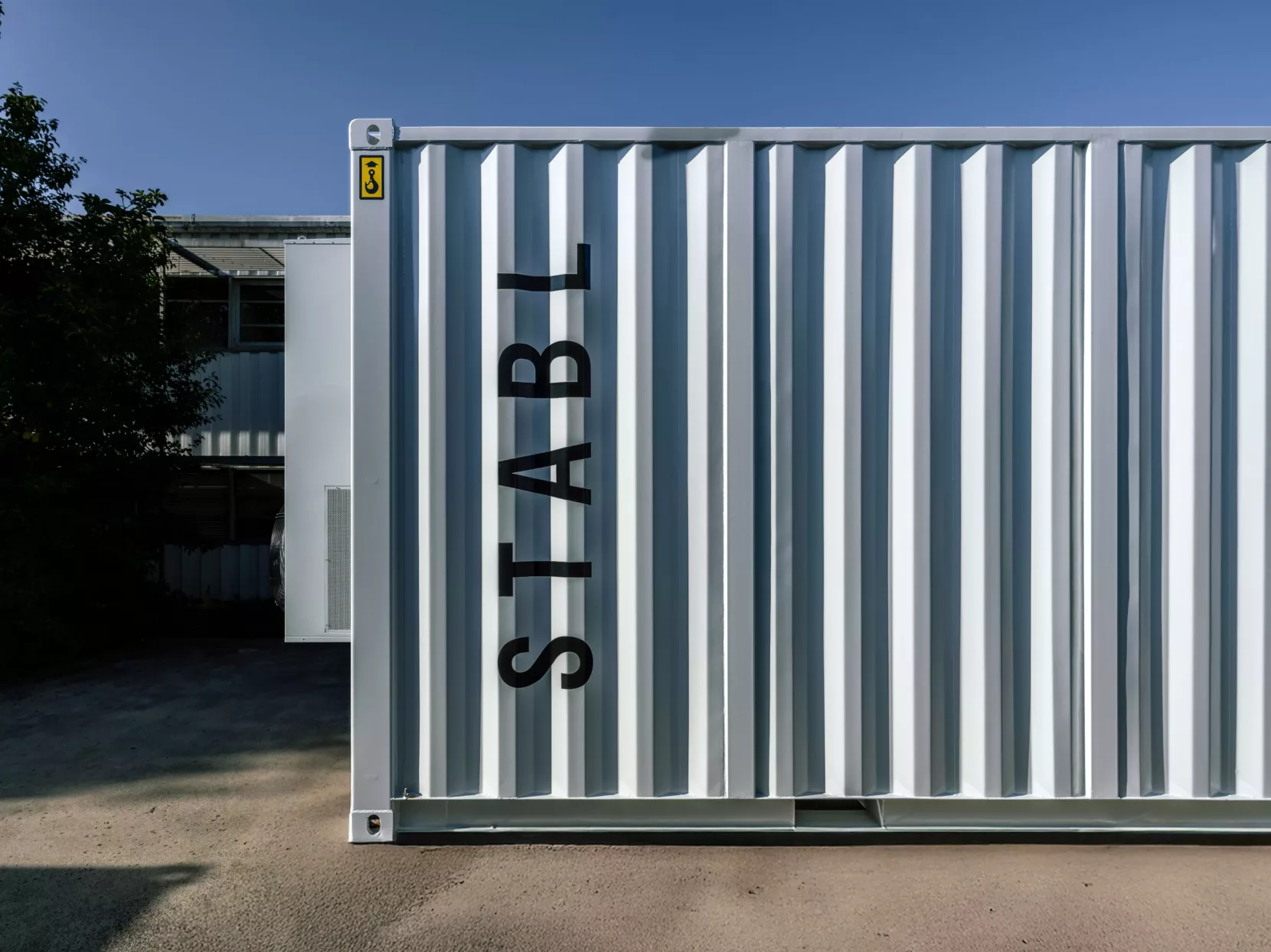
The industrial electricity price not only rewards low-cost electricity procurement, but also measures that make electricity consumption more flexible and efficient. At the same time, energy costs become easier to calculate and companies are encouraged to implement the required measures for more climate-friendly energy systems in an economically viable way. In this way, battery storage systems are transformed from a technical asset into a strategic lever for greater flexibility, security of supply and competitiveness.
By the way: For companies that are not on the KUEBLL list, there are numerous direct opportunities to significantly reduce their electricity costs with a battery storage system, even without direct funding:
Read our white paper "Battery storage solutions for a flexible energy future"
Download White Paper
Knowledge & Opinion
23. September 2026
The Optimal Storage Duration and Depth for Battery Storage Systems
Knowledge & Opinion
15. June 2026
Grid Fees Reform: Prospects for the Future of Battery Storage

Knowledge & Opinion
18. May 2026
EU Initiative Against Chinese Inverters: Impact on Battery Storage Systems
© 2026 STABL Energy GmbH